Can You Use Silicone Lube With a Silicone Sleeve?
Use water-based lube first. Silicone lube may affect some silicone sleeves, so test 1 small spot for 10 minutes only if instructions allow it.
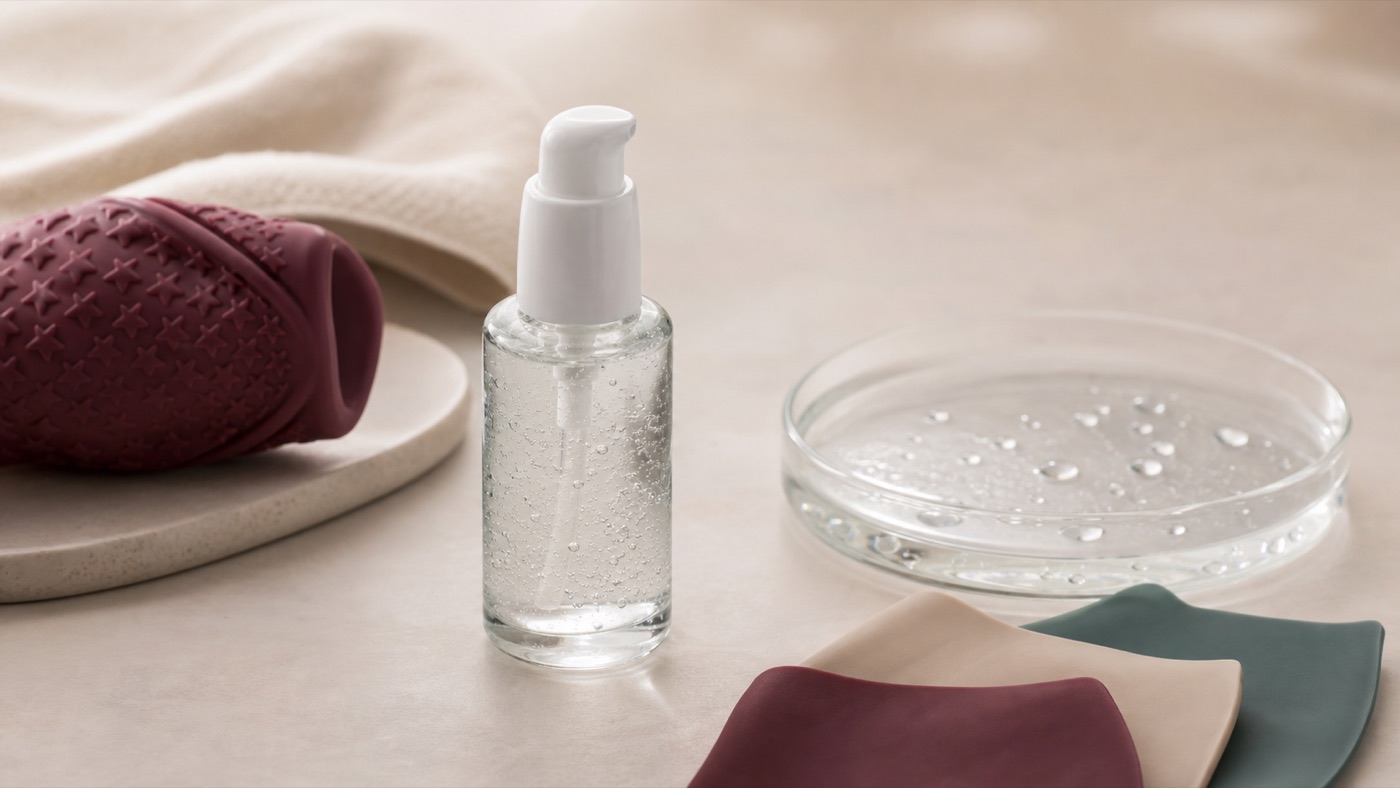
Water-based lubricant is the safest default.
Water-based lubricant is easier to rinse away than oil-based lubricant and usually has fewer material-compatibility concerns than silicone-based lubricant. It is the best first choice for most users.
Silicone lube needs caution because formulas vary.
Some silicone lubricants can interact with some silicone accessories. A 10-minute patch test on a small hidden area is safer than applying it across the full sleeve immediately.
Oil-based lubricant is the highest-friction cleanup choice.
Oil-based lubricant can be harder to wash off and may damage latex barriers. Compared with water-based lubricant, it usually creates more cleanup work and more compatibility questions.
More lubricant is better than more force.
If friction appears, add lubricant instead of pushing through. A pea-sized extra amount is safer than continuing with dryness or drag.
FAQ
What lube should I use with a silicone sleeve?
Water-based lubricant is the safest default for most silicone sleeves.
Can silicone lube damage silicone?
It can affect some silicone products, depending on the formula. Check instructions or test a small spot first.
How long should a patch test take?
Use a small hidden area and wait about 10 minutes before checking for tackiness or surface change.
Should I use oil-based lubricant?
Avoid oil-based lubricant if you want easier cleanup or if you use latex barriers.